Graduate Programs

Updated: Jan 5, 2022
A master’s degree in conservation is the recognised credential for today’s professional conservator. According to the 2014 AIC Compensation Survey, the vast majority of practicing conservators hold advanced degrees in conservation. In the United States, these graduate programs are typically two to four years in duration and incorporate training in both the theory and practice of cultural heritage conservation.
Accredited university programs grant either a Master of Arts or Science in Conservation or a master’s degree in an allied field (typically Archeology, Historic Preservation, Art History, or Library Science). These graduate programs require between two to four years of study. Although the specific degree and timeline vary among the programs, these credentials are considered to be professionally equivalent. There are numerous international programs, which also vary in terms of length and content. A few Ph.D. programs exist for advanced study in the conservation of historic preservation.
Career Path: A graduate degree from an accredited university is the basic credential required for most professional conservator positions. Many positions will also require additional work experience, which can be gained through post-graduate fellowships, project-based positions, and temporary contract work.
Step 1: Application Process
Admission to conservation degree programs is highly competitive. In addition to a formal application with a transcript and letters of recommendation, programs typically require an interview. Candidates may be asked to send or present a portfolio of artwork and conservation projects that demonstrates manual dexterity as well as familiarity with techniques and materials. The Emerging Conservation Professionals Network (ECPN) has a Basic Advice for Conservation Graduate School Applications for more guidance.
Step 2: Find an Opportunity
There is currently no organisation that maintains a complete and up-to-date directory of conservation graduate programs either in North America or internationally, however, Wikipedia and Conservation Online (CoOL) provide a more extensive list of conservation programs across the globe.
Step 3: Find an Opportunity
There is currently no organisation that maintains a complete and up-to-date directory of conservation graduate programs either in North America or internationally, however, Wikipedia and Conservation Online (CoOL) provide a more extensive list of conservation programs across the globe.
Step 4: Academic Experience
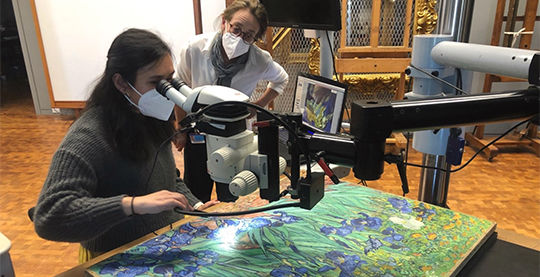
Each of the North American graduate programs in conservation requires students to complete coursework in materials science, advanced documentation techniques, historic and modern production technologies, conservation ethics, treatment methodologies, and materials. The academic year of a conservation graduate program is a full-time experience, requiring the completion of independent and group research and writing projects, scientific lab work, and conservation treatment. In the penultimate year of study, graduate students typically produce one or two original research papers, often centering on the technical study of artwork, an in-depth treatment project, the art historical context of an artwork, or an examination of conservation theory and practice. Course requirements and structure vary among the programs; in-depth information is available on each program’s website listed below.
In addition to rigorous coursework, students are expected to pursue supplemental experiences during breaks in the academic year, often completing winter workshops and summer internships that offer treatment experience and opportunities to become familiar with a wide range of collection types and work settings. Most of the programs also require a final year-long internship, allowing the student to be mentored as a staff member.
Step 5: What's Next?
After graduation, new conservators may find employment in a collecting institution, regional centre, or private practice. Many continue their education by applying for institution-sponsored fellowships.


Comments